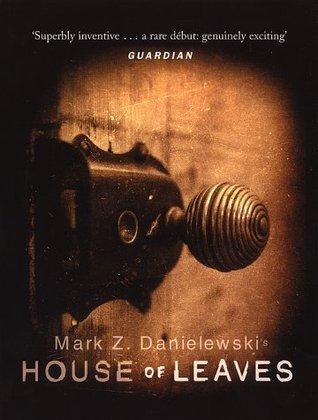
House of Leaves

7 Books Like House of Leaves by Mark Z. Danielewski

by Mark Z. Danielewski

4.1(217k)

House of Leaves stands as one of modern literature's most audacious experiments in form and dread. Mark Z. Danielewski's 1999 novel collapses the boundary between structure and story, creating a labyrinthine reading experience where typography becomes plot, footnotes become narrative, and a house becomes a metaphor for the impossible made tangible. Readers seeking books like House of Leaves often chase that same vertigo: the sensation of being lost in a text as deliberately disorienting as the architecture it describes. The novel's power rests not only in its impossible house but in the nested unreliable narrators who struggle to document it, each layer of storytelling pulling further from truth. What emerges is cosmic horror stripped of monsters, replaced instead by the terrifying possibility that reality itself might be fractured beyond comprehension.

The DNA of House of Leaves runs through several threads: experimental narrative architecture that mirrors psychological distortion, obsessive documentation of the inexplicable, and the creeping sense that knowledge itself might be corrupted or incomplete. These elements appear across genre boundaries, from philosophical horror to metafictional puzzles to straight psychological terror. Books that capture similar territory share an investment in form as meaning, where how the story is told becomes as important as what happens. Many also feature protagonists spiraling deeper into obsession, grasping at explanation in the face of the genuinely unknowable. The best of them understand that cosmic dread doesn't require visible monsters; it requires only the collapse of the reader's confidence in what they're reading.

What follows is a curated collection of books that operate in the same conceptual space as House of Leaves. Some share its formal experimentation and nested narratives. Others pursue its themes of psychological unraveling and impossible architecture. A few are straightforward classics of cosmic and psychological horror that earned their place through sheer mastery of dread. None of these books read exactly like Danielewski's impossible house, nor would you want them to. Instead, each offers its own doorway into the territory that House of Leaves claims: the space where narrative breaks down, where obsession becomes a form of horror, and where the shape of a story matters as much as its content. Whether you're drawn to metafictional risk-taking, to the accumulation of mundane details concealing vast wrongness, or to the pursuit of answers that don't exist, these picks provide passages deeper into the dark.

There Is No Antimemetics Division
1

There Is No Antimemetics Division

by qntm

4.0(52k)

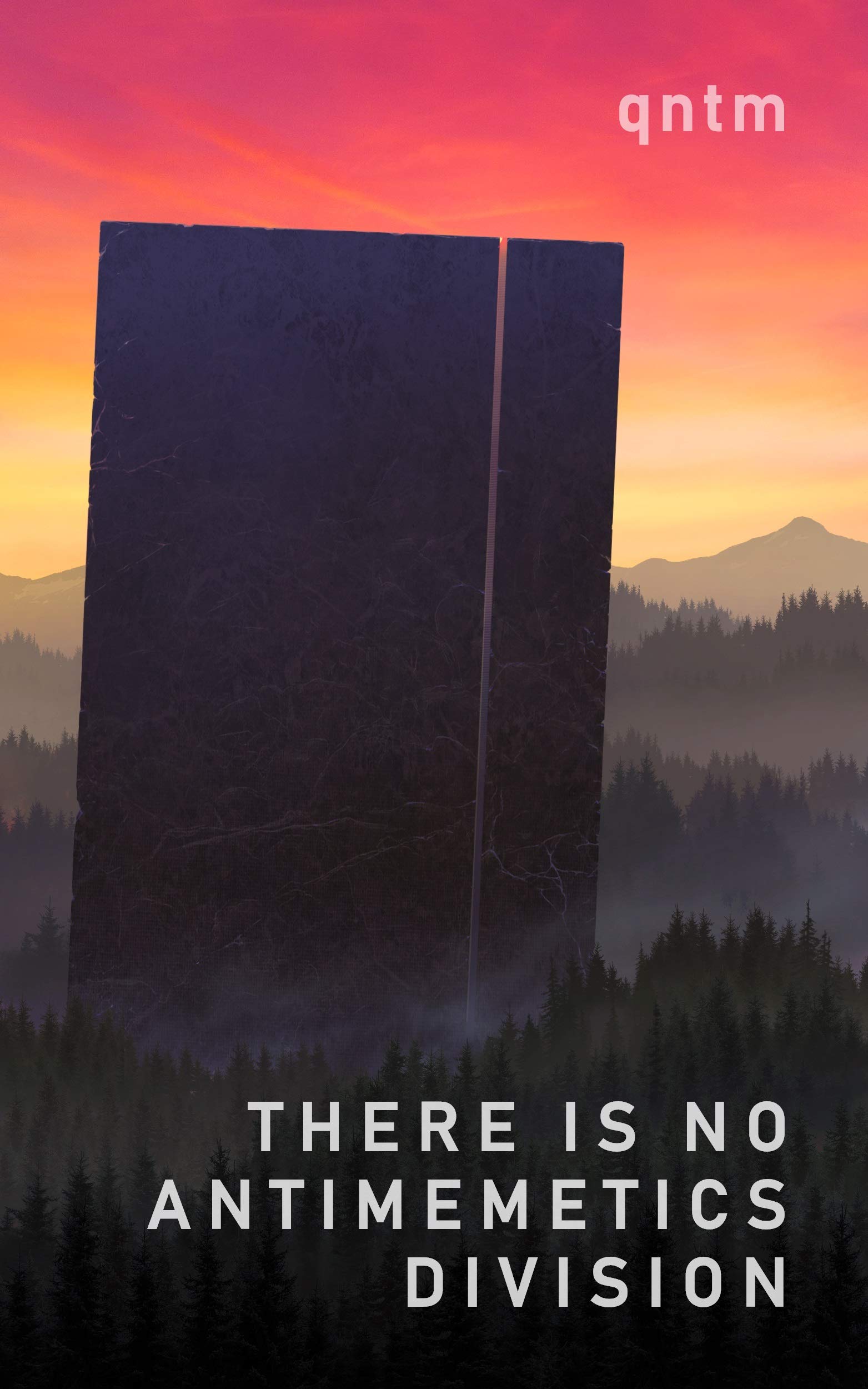
This SCP Foundation novella by qntm transforms cosmic horror into bureaucratic nightmare, where classification and redaction themselves become weapons against understanding. Like House of Leaves, it uses nested documentation, contradictory evidence, and the deliberate obfuscation of information to generate dread. The story's power derives not from what it describes directly but from the gaps and erasures in the record, from the implication that some things cannot be known without being destroyed by the knowing. The reading experience mirrors the disorientation of pursuing something systematically unmade by those trying to contain it.

An antimeme is an idea with self-censoring properties; an idea which, by its intrinsic nature, discourages or prevents people from spreading it. Antimemes are real. Think of any piece of information which you wouldn't share with anybody, like passwords, taboos and dirty secrets. Or any piece of information which would be difficult to share even if you tried complex equations, very boring passages of text, large blocks of random numbers, and dreams... But anomalous antimemes are another matter entirely. How do you contain something you can't record or remember? How do you fight a war against an enemy with effortless, perfect camouflage, when you can never even know that you're at war? Welcome to the Antimemetics Division. No, this is not your first day.
Annihilation
3

Annihilation

by Jeff Vandermeer

3.8(279k)

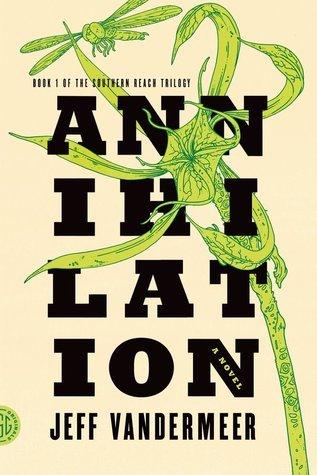
Jeff VanderMeer's first Borne novel channels cosmic dread through a landscape that operates by alien logic, much as Danielewski's house operates by impossible geometry. Both texts feature obsessive documentation of the inexplicable and protagonists driven by compulsion deeper than rationality allows. The shimmer that characterizes Area X shares the house's quality of being fundamentally resistant to comprehension, transformable in ways that cannot be fully explained. VanderMeer's prose captures that same sense of wrongness accumulating through mundane observation, horror accruing through the careful notation of impossible details.

Area X has been cut off from the rest of the world for decades. Nature has reclaimed the last vestiges of human civilization. The first expedition returned with reports of a pristine, Edenic landscape; the second expedition ended in mass suicide, the third in a hail of gunfire as its members turned on one another. The members of the eleventh expedition returned as shadows of their former selves, and within weeks, all had died of cancer. In Annihilation, the first volume of Jeff VanderMeer's Southern Reach Trilogy, we join the twelfth expedition. The group is made up of four women: an anthropologist; a surveyor; a psychologist, the de facto leader; and our narrator, a biologist. Their mission is to map the terrain, record all observations of their surroundings and of one another, and, above all, avoid being contaminated by Area X itself. They arrive expecting the unexpected, and Area X delivers—but it’s the surprises that came across the border with them and the secrets the expedition members are keeping from one another that change everything.

The Raw Shark Texts
7

The Raw Shark Texts

by Steven Hall

3.8(18k)

Iain Banks' 2006 novel uses fragmented narrative, typographical play, and nested documents to tell the story of a man pursued by a linguistic entity that consumes memory and language itself. The formal experimentation directly echoes Danielewski, while the central conceit of a predator made from narrative itself offers a darkly comic complement to House of Leaves' exploration of impossible spaces. Both texts make form central to content, suggesting that the medium through which we receive information shapes what that information means.

Eric Sanderson wakes up one day with no idea who or where he is. A note instructs him to call a Dr. Randle, who informs him that he is undergoing yet another episode of memory loss and that for the last two years—since the tragic death of his great love, Clio, while vacationing in Greece—he’s been suffering from an acute disassociative disorder. But there may be more to the story, or it may be a different story altogether. As Eric Sanderson begins to examine letters and papers left behind by “the first Eric Sanderson” and the staggering tale they seem to contain, he and the reader embark on a quest to recover the truth and to escape the predatory forces that threaten to devour him. Moving with the pace and momentum of a superb thriller, exploring ideas about language and information as well as identity, The Raw Shark Texts is ultimately a novel about the magnitude of love and the devastating effect of losing that love.

View on Amazon
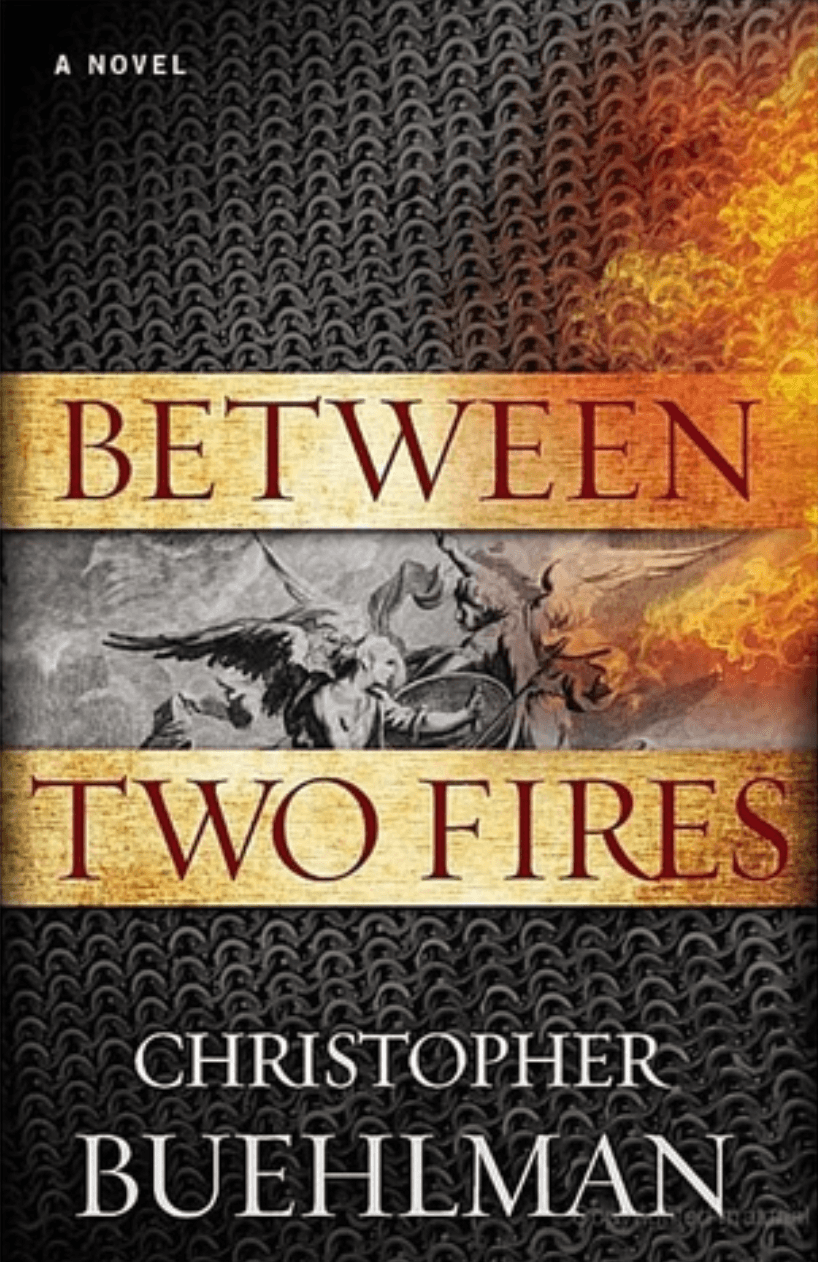
Between Two Fires
8

Between Two Fires

by Christopher Buehlman

4.1(82k)

Scott Spencer's historical horror novel channels cosmic dread into 14th-century France, where a mysterious wanderer leaves contamination and dissolution in his wake. Like House of Leaves, it relies on the accumulation of mundane detail to generate creeping wrongness, on the protagonist's inability to articulate or resist what's occurring. The fragmented timeline and unreliable documentation of events create a reading experience that mirrors psychological breakdown, suggesting that some truths cannot be safely held in the mind.

The year is 1348. Thomas, a disgraced knight, has found a young girl alone in a dead Norman village. An orphan of the Black Death, and an almost unnerving picture of innocence, she tells Thomas that plague is only part of a larger cataclysm—that the fallen angels under Lucifer are rising in a second war on heaven, and that the world of men has fallen behind the lines of conflict. Is it delirium or is it faith? She believes she has seen the angels of God. She believes the righteous dead speak to her in dreams. And now she has convinced the faithless Thomas to shepherd her across a depraved landscape to Avignon. There, she tells Thomas, she will fulfill her mission to confront the evil that has devastated the earth, and to restore to this betrayed, murderous knight the nobility and hope of salvation he long abandoned. As hell unleashes its wrath, and as the true nature of the girl is revealed, Thomas will find himself on a macabre battleground of angels and demons, saints, and the risen dead, and in the midst of a desperate struggle for nothing less than the soul of man.

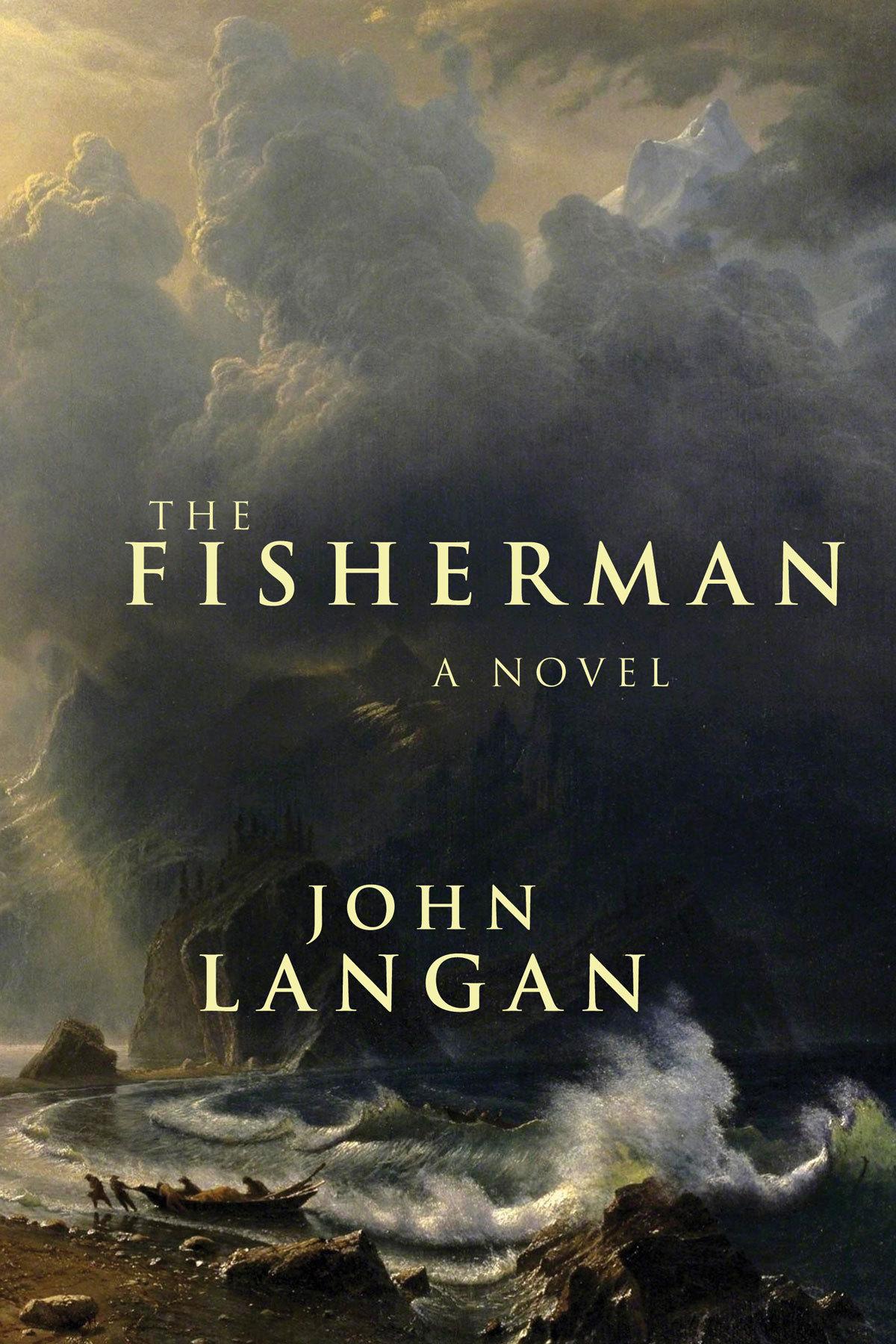
The Fisherman
9

The Fisherman

by John Langan

3.8(44k)

John Langan's novella directly engages with Lovecraftian cosmic horror through the frame of a fisherman telling a friend about a much deeper catch. The nested narrative structure, the suggestion of contaminated knowledge, and the slow revelation that something is profoundly wrong mirror House of Leaves' architecture. Langan proves that formal experimentation and emotional depth can coexist, that a complex narrative structure can serve genuine horror rather than serving as mere ornamentation.

In upstate New York, in the woods around Woodstock, Dutchman's Creek flows out of the Ashokan Reservoir. Steep-banked, fast-moving, it offers the promise of fine fishing, and of something more, a possibility too fantastic to be true. When Abe and Dan, two widowers who have found solace in each other's company and a shared passion for fishing, hear rumors of the Creek, and what might be found there, the remedy to both their losses, they dismiss it as just another fish story. Soon, though, the men find themselves drawn into a tale as deep and old as the Reservoir. It's a tale of dark pacts, of long-buried secrets, and of a mysterious figure known as Der Fisher: the Fisherman. It will bring Abe and Dan face to face with all that they have lost, and with the price they must pay to regain it.

View on Amazon

Get Notified When These Books Go Free

Join 50,000+ readers who get handpicked free and discounted Kindle books delivered to their inbox every day.

Sign Up Free
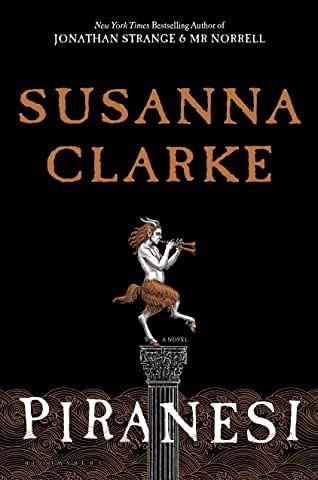
Piranesi
10

Piranesi

by Susanna Clarke

4.2(486k)

Susanna Clarke's 2020 novel constructs a world of impossible architecture and nested realities, where a figure navigates a vast house of halls and staircases, slowly discovering that his reality itself is constructed. The mystery of space and identity, the gradual unraveling of assumed truth, and the metafictional framework directly engage with Danielewski's concerns. Clarke demonstrates that experimental structure and genuine emotional stakes aren't mutually exclusive, that a reader can be simultaneously disoriented and deeply invested in resolution.

Alternate cover edition of ISBN 9781635575637. Piranesi’s house is no ordinary building: its rooms are infinite, its corridors endless, its walls are lined with thousands upon thousands of statues, each one different from all the others. Within the labyrinth of halls an ocean is imprisoned; waves thunder up staircases, rooms are flooded in an instant. But Piranesi is not afraid; he understands the tides as he understands the pattern of the labyrinth itself. He lives to explore the house. There is one other person in the house—a man called The Other, who visits Piranesi twice a week and asks for help with research into A Great and Secret Knowledge. But as Piranesi explores, evidence emerges of another person, and a terrible truth begins to unravel, revealing a world beyond the one Piranesi has always known.

View on Amazon
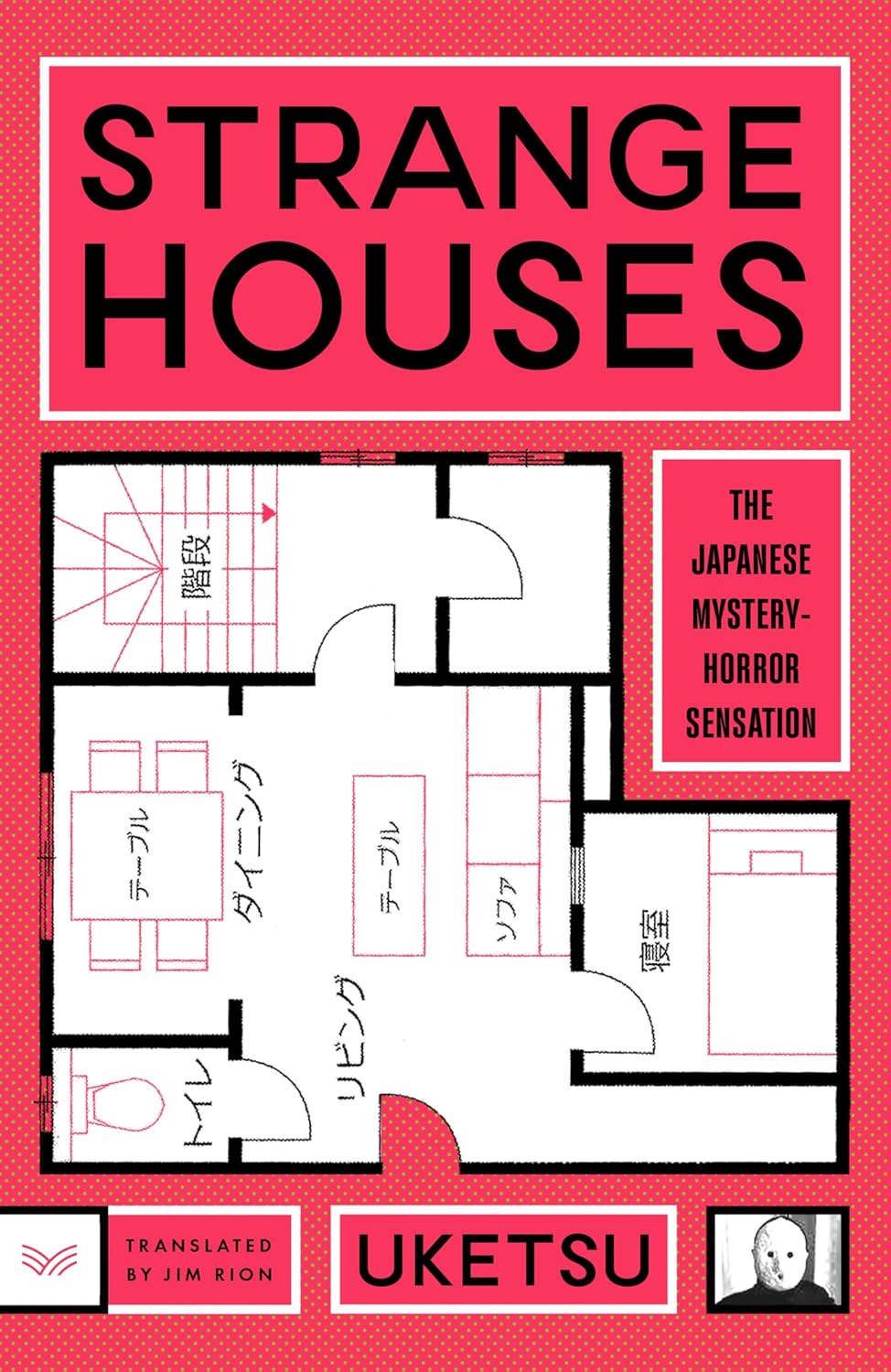
Strange Houses
15

Strange Houses

by Uketsu

3.5(96k)

Collections focusing on impossible architecture and domestic wrongness operate in House of Leaves' territory, exploring how familiar spaces can become fundamentally alien. These stories understand that the home, corrupted, becomes the most effective setting for horror, that architecture and psychology are inseparable. They share Danielewski's investment in space as a source of genuine dread rather than mere setting.

When a writer fascinated by the macabre is approached by an acquaintance, he finds himself investigating an eerie house for sale in Tokyo. At first, with its bright and spacious interior, it seems the perfect first home. But upon closer inspection, the building's floor plans reveal a mysterious "dead space" hidden between its walls. Seeking a second opinion, the writer shares the floor plans with his friend Kurihara, an architect, only to discover more unnerving details throughout. What is the true purpose behind the house's disturbing design? And what happened to the former owners who disappeared without a trace? When a body suddenly appears and a young woman reaches out about a second house, it soon becomes clear that the writer and his friend may be in over their heads. Structured around a series of chilling floorplans, with Strange Houses, mystery-horror YouTube sensation Uketsu casts readers in the role of detective, inviting them to help map out the truth hidden within these puzzling floor plans . . . and the terrifying plot behind it all.

The appeal of House of Leaves lies partly in its refusal to offer easy comfort. It is a difficult book, intentionally so, and books like House of Leaves maintain that same commitment to challenging readers rather than placating them. They trust in ambiguity, in the power of form, in the slow accumulation of dread over jump scares. They recognize that the most unsettling horror often comes not from what is explicitly described but from the gaps readers are forced to fill themselves.

Returning to House of Leaves after reading any of these titles offers a strange reward: the architecture of Danielewski's novel becomes slightly less alien, its obsessions slightly more legible. Yet it never fully reveals itself. That's precisely the point, and perhaps why readers keep circling back to it, marked by their passage through its impossible halls.

Never Miss a Free Kindle Book

We track thousands of Kindle books daily and alert you when they drop to free. Join 50,000+ readers getting the best deals.

Sign Up Free

Prefer free books on the go?

The Free Books for Kindle app gives you daily free book alerts, genre filtering, push notifications and zero ads.

Get the App