Stephen King

13 Authors Like Stephen King

4.3(1787k)

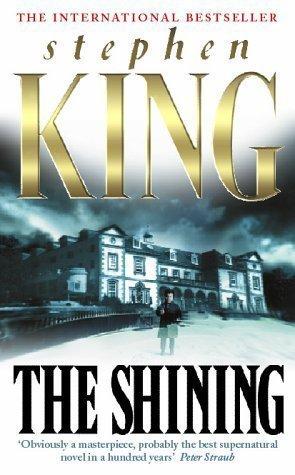
Stephen King has been the dominant voice in horror and dark fiction for over fifty years, and his influence extends far beyond the genre. From The Shining to It to The Stand, King has published more than sixty novels and hundreds of short stories, selling over 350 million copies worldwide. But the numbers do not explain why King matters. What makes his work endure is his understanding that horror is not about monsters. It is about people. A recovering alcoholic trapped in a haunted hotel with his family. A group of childhood friends returning to their hometown to face an ancient evil. A small-town teacher who discovers a way to travel back in time. King writes ordinary Americans with an authenticity that makes even his most outlandish supernatural scenarios feel grounded and real.

King's real gift is character. He writes blue-collar workers, teachers, struggling writers, and small-town kids with a specificity that makes you forget you are reading fiction. He knows how people talk in rural Maine diners, how a marriage falls apart under pressure, and how fear compounds when you cannot explain what is happening. That emotional realism is the engine that powers the horror. You care about these people before anything terrible happens to them, which is exactly what makes the terrible things so effective.

If you are looking for authors like Stephen King or horror writers similar to Stephen King, you want books that combine psychological depth with genuine dread, that treat their characters as real human beings rather than disposable victims. The thirteen picks below span classic gothic horror, psychological suspense, dystopian fiction, and dark fantasy. Some of these authors directly influenced King; others were influenced by him. All of them share his conviction that the most frightening stories are the ones where you believe in the people at the centre.

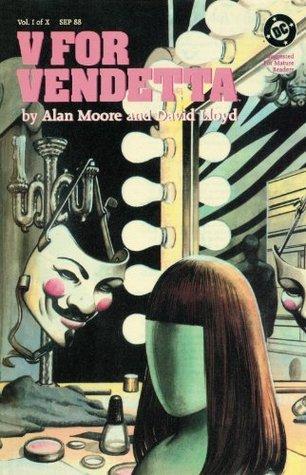
V for Vendetta #1
1

V for Vendetta #1

by Alan Moore

4.1(91k)

Alan Moore's V for Vendetta is a graphic novel, not a prose novel, but its connection to Stephen King is deeper than you might expect. Set in a fascist future Britain, it follows V, a masked anarchist, as he wages a one-man war against the totalitarian government that destroyed his life. Moore writes political horror with the same unflinching intensity King brings to supernatural horror. The connection is thematic: both King and Moore are obsessed with how ordinary people respond to systems of control, whether those systems are haunted hotels, alien clowns, or authoritarian states. If you read King for the social commentary that runs underneath the horror, V for Vendetta is one of the most powerful versions of that impulse in any medium.

In a post-nuclear world, Great Britain has emerged as a Fascist state. When young Evey Hammond is saved by a mysterious masked stranger, she is pulled into his quest to fight back and overthrow the government.

View on Amazon
Dracula
2

Dracula

by Bram Stoker

4.0(1374k)

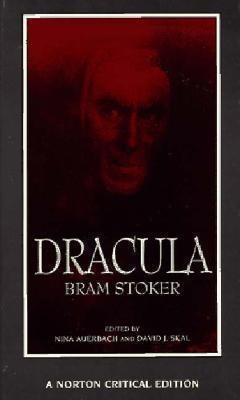
Bram Stoker's Dracula is the novel that invented modern horror fiction, and its influence on Stephen King is direct and acknowledged. Told through letters, diary entries, and newspaper clippings, Dracula follows a group of people who discover that Count Dracula has moved to England and is preying on their friends and families. Stoker builds dread the same way King does: slowly, through accumulating detail and the growing realization that something terrible is happening in familiar surroundings. The epistolary structure, where you piece together the truth from multiple unreliable accounts, anticipates the way King often constructs his narratives from different perspectives. If you love King's ability to make the supernatural feel real and immediate, Dracula is the novel that showed everyone how it was done.

You can find an alternative cover edition for this ISBN here and here. When Jonathan Harker visits Transylvania to help Count Dracula with the purchase of a London house, he makes a series of horrific discoveries about his client. Soon afterwards, various bizarre incidents unfold in England: an apparently unmanned ship is wrecked off the coast of Whitby; a young woman discovers strange puncture marks on her neck; and the inmate of a lunatic asylum raves about the 'Master' and his imminent arrival. In Dracula, Bram Stoker created one of the great masterpieces of the horror genre, brilliantly evoking a nightmare world of vampires and vampire hunters and also illuminating the dark corners of Victorian sexuality and desire. This Norton Critical Edition includes a rich selection of background and source materials in three areas: Contexts includes probable inspirations for Dracula in the earlier works of James Malcolm Rymer and Emily Gerard. Also included are a discussion of Stoker's working notes for the novel and "Dracula's Guest," the original opening chapter to Dracula. Reviews and Reactions reprints five early reviews of the novel. "Dramatic and Film Variations" focuses on theater and film adaptations of Dracula, two indications of the novel's unwavering appeal. David J. Skal, Gregory A. Waller, and Nina Auerbach offer their varied perspectives. Checklists of both dramatic and film adaptations are included. Criticism collects seven theoretical interpretations of Dracula by Phyllis A. Roth, Carol A. Senf, Franco Moretti, Christopher Craft, Bram Dijkstra, Stephen D. Arata, and Talia Schaffer. A Chronology and a Selected Bibliography are included.

View on Amazon
The Haunting of Hill House
3

The Haunting of Hill House

by Shirley Jackson

3.8(344k)

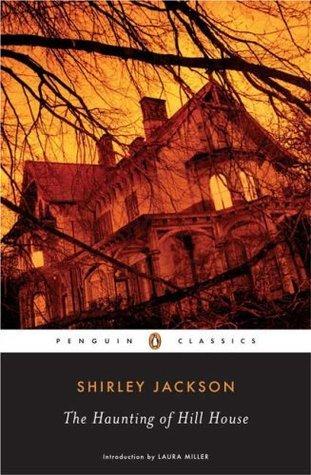
Shirley Jackson's The Haunting of Hill House is the single most important haunted house novel ever written, and King has cited it as a direct influence on The Shining. Four people arrive at Hill House for a paranormal investigation: Dr. Montague, the researcher; Theodora, a bohemian artist; Luke, the heir to the property; and Eleanor Vance, a lonely, fragile woman who has spent her life caring for her dying mother. Jackson writes Eleanor's psychological disintegration with such precision that you are never entirely sure whether the house is haunted or whether Eleanor is simply losing her mind. That ambiguity, the refusal to let you feel safe in your interpretation, is something King borrowed directly. If you want to understand where King's approach to horror came from, this is the source text.

“Hill House, not sane, stood by itself against its hills, holding darkness within. . . .” Four seekers have arrived at the rambling old pile known as Hill House: Dr. Montague, an occult scholar looking for solid evidence of psychic phenomena; Theodora, his lovely and lighthearted assistant; Luke, the adventurous future inheritor of the estate; and Eleanor, a friendless, fragile young woman with a dark past. As they begin to cope with chilling, even horrifying occurrences beyond their control or understanding, they cannot possibly know what lies ahead. For Hill House is gathering its powers—and soon it will choose one of them to make its own.

View on Amazon
The Exorcist
4

The Exorcist

by William Peter Blatty

4.2(249k)

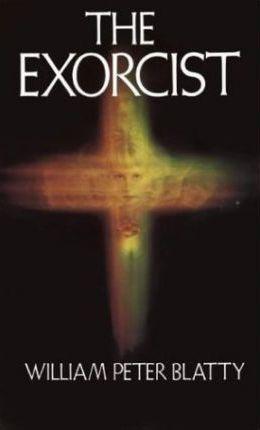
William Peter Blatty's The Exorcist was published in 1971, three years before King's Carrie, and it shares King's conviction that horror works best when the characters feel real. Twelve-year-old Regan MacNeil begins displaying disturbing behaviour that escalates from strange noises to full demonic possession. Her mother, an actress, exhausts every medical and psychiatric option before turning to the Church. Blatty, like King, grounds the horror in domestic reality: a mother's terror for her child, the failure of rational explanation, the desperation that drives someone to believe in the impossible. The Exorcist spent fifty-seven weeks on the New York Times bestseller list because it made readers genuinely afraid in a way that felt personal. If King's The Shining is about a family disintegrating under supernatural pressure, The Exorcist is the Catholic version of the same nightmare.

Originally published in 1971, The Exorcist, one of the most controversial novels ever written, went on to become a literary phenomenon: It spent fifty-seven weeks on the New York Times bestseller list, seventeen consecutively at number one. Inspired by a true story of a child's demonic possession in the 1940s, William Peter Blatty created an iconic novel that focuses on Regan, the eleven-year-old daughter of a movie actress residing in Washington, D.C. A small group of overwhelmed yet determined individuals must rescue Regan from her unspeakable fate, and the drama that ensues is gripping and unfailingly terrifying. Two years after its publication, The Exorcist was, of course, turned into a wildly popular motion picture, garnering ten Academy Award nominations. On opening day of the film, lines of the novel's fans stretched around city blocks. In Chicago, frustrated moviegoers used a battering ram to gain entry through the double side doors of a theater. In Kansas City, police used tear gas to disperse an impatient crowd who tried to force their way into a cinema. The three major television networks carried footage of these events; CBS's Walter Cronkite devoted almost ten minutes to the story. The Exorcist was, and is, more than just a novel and a film: it is a literary landmark. Purposefully raw and profane, The Exorcist still has the extraordinary ability to disturb readers and cause them to forget that it is "just a story." Newly polished and added to by it author and published here in this beautiful fortieth anniversary edition, it remains an unforgettable reading experience and will continue to shock and frighten a new generation of readers.

View on Amazon
The Long Walk
5

The Long Walk

by Richard Bachman

4.0(237k)

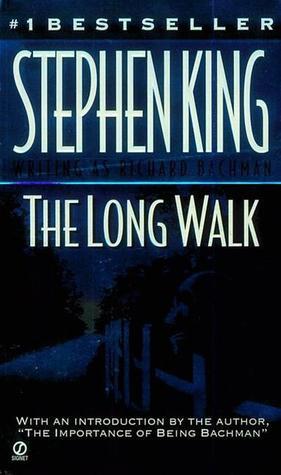
The Long Walk is the Bachman book that King fans consider his finest work under the pseudonym, and many consider it his best work full stop. In a dystopian America, one hundred teenage boys begin walking south from the Maine-Canada border. The rules are simple: maintain four miles per hour, or receive a warning. Three warnings, and you are shot dead. The last boy walking wins the prize. King wrote this when he was a college freshman, and the raw energy shows. There is no supernatural element, no monster, no twist. Just one hundred boys walking until they die, and the slow psychological deterioration of the survivors. The connection to King's later work is the unflinching examination of what extreme pressure does to ordinary people. If you have read King's major novels and want something stripped down to pure dread, The Long Walk is it.

Against the wishes of his mother, sixteen-year-old Ray Garraty is about to compete in the annual grueling match of stamina and wits known as The Long Walk. One hundred boys must keep a steady pace of four miles per hour without ever stopping... with the winner being awarded "The Prize"—anything he wants for the rest of his life. But, as part of this national tournament that sweeps through a dystopian America year after year, there are some harsh rules that Garraty and ninety-nine others must adhere to in order to beat out the rest. There is no finish line—the winner is the last man standing. Contestants cannot receive any outside aid whatsoever. Slow down under the speed limit and you're given a warning. Three warnings and you're out of the game—permanently...

View on Amazon

Get Notified When These Books Go Free

Join 50,000+ readers who get handpicked free and discounted Kindle books delivered to their inbox every day.

Sign Up Free
Thinner
6

Thinner

by Richard Bachman

3.8(212k)

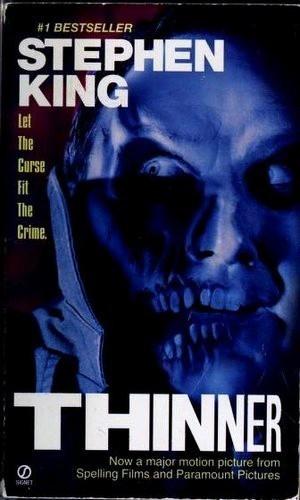
Thinner is the Bachman novel that reads most like King's mainline work. Lawyer Billy Halleck runs over an old Romani woman with his car and escapes legal consequences through his connections. The woman's father places a curse on him: Halleck begins losing weight, relentlessly, unstoppably, no matter how much he eats. King uses the curse as a vehicle for examining guilt, privilege, and the way powerful people avoid accountability until something they cannot control forces them to confront what they have done. The horror is not the weight loss itself but Halleck's moral disintegration as he tries to transfer the curse to someone else rather than accept responsibility. If you read King for the way he uses horror as a lens on human weakness, Thinner is one of his most focused examples.

After an old gypsy woman is killed by his car, lawyer Billy Halleck is stricken with a flesh-wasting malady and must undertake a nightmarish journey to confront the forces of death. Movie tie-in. Book available.

View on Amazon
The Silence of the Lambs
7

The Silence of the Lambs

by Thomas Harris

4.3(552k)

Thomas Harris's The Silence of the Lambs is not horror in the supernatural sense, but it is one of the most terrifying novels ever written, and its influence on King's more psychological works is significant. Clarice Starling, a young FBI trainee, is sent to interview the imprisoned serial killer Hannibal Lecter for insight into a new case. The relationship between Starling and Lecter, her intelligence against his manipulation, her vulnerability against his absolute control of the conversation, is one of the great predator-prey dynamics in fiction. The connection to King is the focus on psychological realism: Harris makes you understand both Starling's fear and Lecter's appeal, just as King makes you understand both the terror and the seduction of his supernatural threats. If you want horror that works entirely through human psychology, Harris is the master.

A serial murderer known only by a grotesquely apt nickname—Buffalo Bill—is stalking women. He has a purpose, but no one can fathom it, for the bodies are discovered in different states. Clarice Starling, a young trainee at the FBI Academy, is surprised to be summoned by Jack Crawford, chief of the Bureau's Behavioral Science section. Her assignment: to interview Dr. Hannibal Lecter—Hannibal the Cannibal—who is kept under close watch in the Baltimore State Hospital for the Criminally Insane. Dr. Lecter is a former psychiatrist with a grisly history, unusual tastes, and an intense curiosity about the darker corners of the mind. His intimate understanding of the killer and of Clarice herself form the core of "The Silence of the Lambs"—an ingenious, masterfully written book and an unforgettable classic of suspense fiction.

View on Amazon
Rage
8

Rage

by Richard Bachman

3.7(51k)

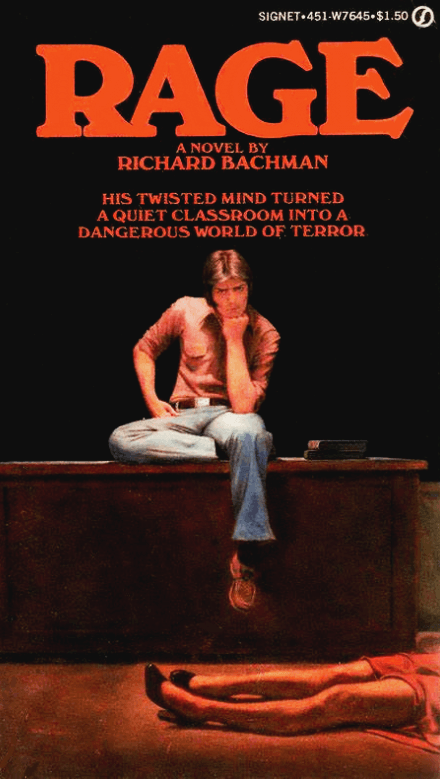
Rage is the most controversial of King's Bachman novels, and King himself pulled it from publication after real-world school shootings. A high school student named Charlie Decker kills his algebra teacher and holds his class hostage for an afternoon. Over the course of the standoff, the students begin sharing their deepest secrets, and the power dynamics in the room shift in disturbing ways. Rage is not a comfortable read, and it is not meant to be. The connection to King's wider work is his fascination with how extreme situations strip away social pretence and reveal what people really are. If you have read King's major novels and want to explore his most raw and uncomfortable early writing, Rage is essential, though it is difficult to find in print.

A disturbed high-school student with authority problems kills one of his teachers and takes the rest of his class hostage. Over the course of one long, tense and unbearable hot afternoon, Charlie Decker explains what led him to this drastic sequence of events, while at the same time deconstructing the personalities of his classmates, forcing each one to justify his or her existence.

View on Amazon
1984
9

1984

by George Orwell

4.2(1791k)

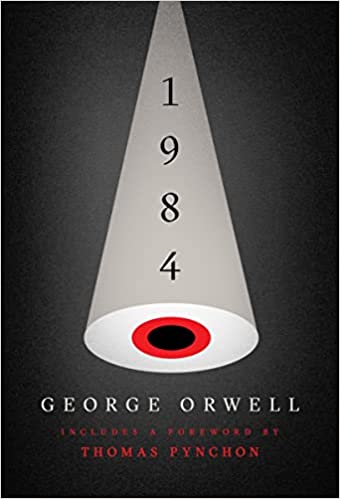
George Orwell's 1984 is dystopian political fiction, not horror, but the experience of reading it is indistinguishable from the experience of reading King at his most bleak. Winston Smith lives in a totalitarian state where the government controls not just behaviour but thought itself. The Thought Police, Room 101, the systematic erasure of history: Orwell writes a world where the horror is not that monsters exist but that human beings have built a system designed to destroy the human spirit. King's The Stand, Under the Dome, and 11/22/63 all explore similar territory: societies under extreme pressure, the corruption of power, and the question of whether human decency can survive institutional evil. If you read King for the social and political undertones in his horror, 1984 is the purest distillation of those themes.

A masterpiece of rebellion and imprisonment where war is peace freedom is slavery and Big Brother is watching. Thought Police, Big Brother, Orwellian - these words have entered our vocabulary because of George Orwell's classic dystopian novel 1984. The story of one man's Nightmare Odyssey as he pursues a forbidden love affair through a world ruled by warring states and a power structure that controls not only information but also individual thought and memory 1984 is a prophetic haunting tale More relevant than ever before 1984 exposes the worst crimes imaginable the destruction of truth freedom and individuality. With a foreword by Thomas Pynchon. This beautiful paperback edition features deckled edges and french flaps a perfect gift for any occasion Alternate cover edition can be found here.

View on Amazon
The Hobbit, or There and Back Again
10
4.3(4310k)

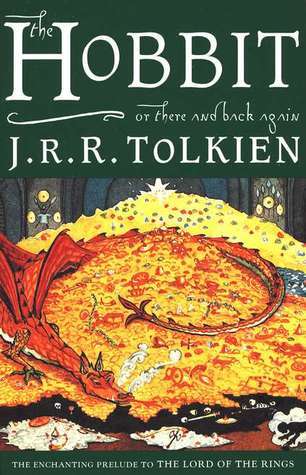
Tolkien's The Hobbit appears on a Stephen King list because King himself has spoken about Tolkien's influence on his work, particularly The Dark Tower series. The Hobbit is a quest narrative about a comfortable creature pulled into an adventure that is far more dangerous than he expected, which is the template for a significant number of King's protagonists. Bilbo Baggins does not want to leave his hobbit hole, just as many of King's heroes do not want to confront the evil that has entered their lives. Tolkien writes wonder where King writes dread, but both authors share an understanding that the journey changes the traveller permanently. If you enjoy the epic scope of King's longer works and his fascination with the battle between good and evil, Tolkien is the literary ancestor.

In a hole in the ground there lived a hobbit. Not a nasty, dirty, wet hole, filled with the ends of worms and an oozy smell, nor yet a dry, bare, sandy hole with nothing in it to sit down on or to eat: it was a hobbit-hole, and that means comfort. Written for J.R.R. Tolkien’s own children, The Hobbit met with instant critical acclaim when it was first published in 1937. Now recognized as a timeless classic, this introduction to the hobbit Bilbo Baggins, the wizard Gandalf, Gollum, and the spectacular world of Middle-earth recounts of the adventures of a reluctant hero, a powerful and dangerous ring, and the cruel dragon Smaug the Magnificent. The text in this 372-page paperback edition is based on that first published in Great Britain by Collins Modern Classics (1998), and includes a note on the text by Douglas A. Anderson (2001). 9780618260300

View on Amazon
Harry Potter and the Philosopher's Stone
11
4.4(2286k)

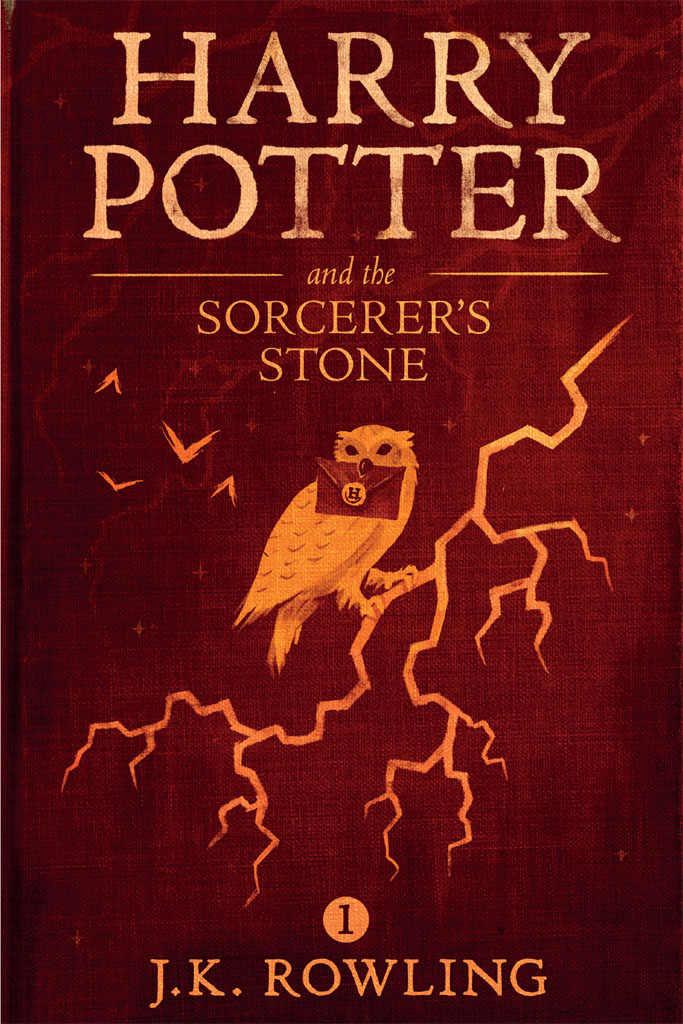
Harry Potter seems like an unusual pick for a list of authors similar to Stephen King, but J.K. Rowling's series operates on many of the same principles. Both King and Rowling write about children confronting evil that adults have failed to contain. Both build their narratives around the idea that courage comes from love and connection rather than power. And both create villains who are terrifying precisely because they represent the corruption of something human. Voldemort, like Pennywise or Randall Flagg, is a figure who preys on weakness and isolation. The Philosopher's Stone is the lightest entry in a series that gets progressively darker, and by the time you reach the later books, Rowling is writing scenes that would sit comfortably in a King novel. If you read King because you love stories about good people fighting genuine evil, the full Harry Potter arc delivers that on a grand scale.

An alternative cover for this ASIN can be found here "Turning the envelope over, his hand trembling, Harry saw a purple wax seal bearing a coat of arms; a lion, an eagle, a badger and a snake surrounding a large letter 'H'." Harry Potter has never even heard of Hogwarts when the letters start dropping on the doormat at number four, Privet Drive. Addressed in green ink on yellowish parchment with a purple seal, they are swiftly confiscated by his grisly aunt and uncle. Then, on Harry's eleventh birthday, a great beetle-eyed giant of a man called Rubeus Hagrid bursts in with some astonishing news: Harry Potter is a wizard, and he has a place at Hogwarts School of Witchcraft and Wizardry. An incredible adventure is about to begin!

View on Amazon
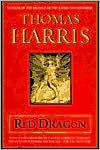
Red Dragon
12

Red Dragon

by Thomas Harris

4.1(348k)

Red Dragon is the novel that introduced Hannibal Lecter to the world, and it is even more focused on the investigative process than The Silence of the Lambs. FBI profiler Will Graham, who caught Lecter and was nearly killed by him, is brought out of retirement to hunt a new serial killer known as the Tooth Fairy. Graham's gift, the ability to empathise with killers in order to understand them, is also his curse, and Harris writes his psychological deterioration with the same care King brings to characters like Jack Torrance. The connection is the idea that understanding evil changes you, that you cannot look into the darkness without it looking back. If you enjoy the way King explores the thin line between sanity and madness in characters who are fundamentally good people, Red Dragon is one of the finest explorations of that theme in crime fiction.

A second family has been massacred by the terrifying serial killer the press has christened "The Tooth Fairy." Special Agent Jack Crawford turns to the one man who can help restart a failed investigation: Will Graham. Graham is the greatest profiler the FBI ever had, but the physical and mental scars of capturing Hannibal Lecter have caused Graham to go into early retirement. Now, Graham must turn to Lecter for help.

View on Amazon
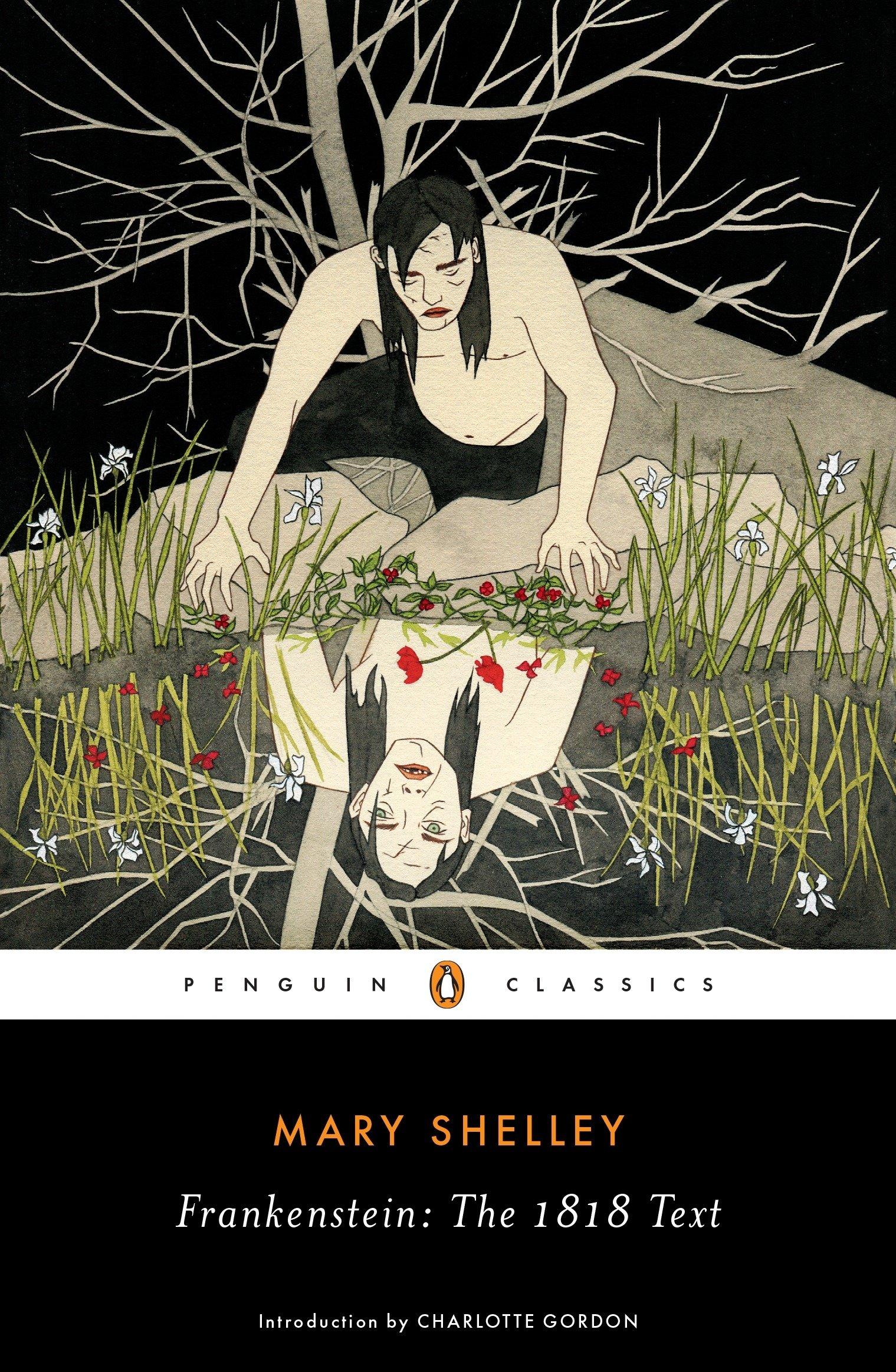
Frankenstein
13

Frankenstein

by Mary Wollstonecraft Shelley

4.0(886k)

Mary Shelley's Frankenstein is the novel that started it all. Published in 1818, it is the first true science fiction novel and arguably the first modern horror novel. Victor Frankenstein creates a living being and then abandons it, and the consequences of that abandonment drive the rest of the story. Shelley wrote about the horror of creation and responsibility at the age of eighteen, and the questions she raised, about what we owe to the things we create, about the dangers of unchecked ambition, about the monster that loneliness makes of all of us, are the same questions King returns to again and again. Pet Sematary, The Shining, and Needful Things all deal with characters who set something in motion and then cannot control the consequences. If you want to go back to the root of everything King does, Frankenstein is the beginning.

Mary Shelley's seminal novel of the scientist whose creation becomes a monster. This edition is the original 1818 text, which preserves the hard-hitting and politically charged aspects of Shelley's original writing, as well as her unflinching wit and strong female voice. This edition also includes a new introduction and suggestions for further reading by author and Shelley expert Charlotte Gordon, literary excerpts and reviews selected by Gordon and a chronology and essay by preeminent Shelley scholar Charles E. Robinson.

View on Amazon

Stephen King's influence on horror, thriller, and dark fiction is so vast that nearly every author working in the genre today owes him something. The picks above cover a wide range: classic gothic horror from Stoker, Shelley, and Shirley Jackson; psychological suspense from Thomas Harris; dystopian nightmares from Orwell; and King's own earlier work published under the Bachman pseudonym. If you are looking for books similar to Stephen King that emphasise the horror elements, start with Shirley Jackson, Bram Stoker, or William Peter Blatty. If you prefer the psychological and thriller side, Thomas Harris's Hannibal Lecter novels are unmatched. And if you have never read King's Bachman books, The Long Walk is arguably the best thing he has ever written. For free Kindle deals from horror and thriller authors, check our daily deals page.

Never Miss a Free Kindle Book

We track thousands of Kindle books daily and alert you when they drop to free. Join 50,000+ readers getting the best deals.

Sign Up Free

Prefer free books on the go?

The Free Books for Kindle app gives you daily free book alerts, genre filtering, push notifications and zero ads.

Get the App